Blog / Electric Vehicles

Expect More Sustainable Volkswagen Electric Cars in the Future

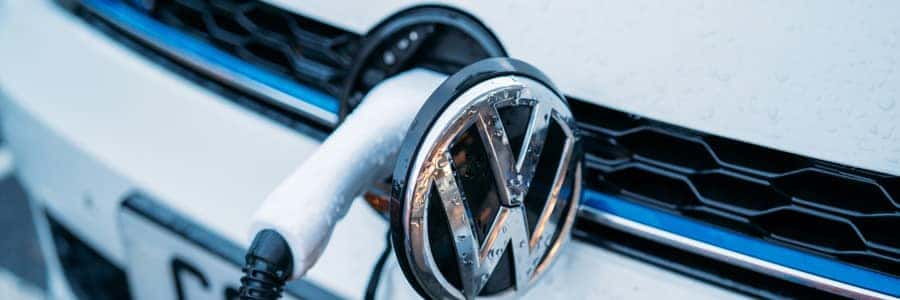
close-up of vw charging port

VW to Produce Electric Cars That Use Recycled Materials

To meet sustainable development goals set by the United Nations, a comprehensive plan has been put into place to hit net zero emissions by the year 2050. However, the goal is only attainable if the majority of companies in each major sector commits to the necessary changes that need to be implemented. For example, there is a tremendous push being made for energy companies that currently use coal-fired power units to switch over to energy-efficient electric power units. Further, buildings that run on gas must switch over to a more sustainable source of energy, such as electricity or solar. Another big step toward sustainability is advancing how recycled materials are used, and it appears Volkswagen is getting on board with their upcoming lineup of VW electric cars. Not only is the automaker committing to vehicles that run on rechargeable batteries, but it is also rolling out innovative ways to make use of recycled materials in its vehicles.

How Electric Cars Address Carbon Dioxide Emissions

According to recent data from the United States Environmental Protection Agency, the typical vehicle emits approximately 4.6 metric tons of carbon dioxide annually. Carbon dioxide is predominantly responsible for causing climate change, depleting the ozone, and warming up the atmosphere. Statistics estimate emissions caused by humans have caused a 50% increase in carbon dioxide in the atmosphere in the last two centuries. What does this mean? For one, it means that the time of preventing the problem has long passed. The United States and the rest of the planet are officially in damage control mode. One of the main ways this is being addressed is by steadily rolling out electric vehicles that are more affordable for consumers and sustainable in the long term. They provide the following benefits:
  • A significant savings on gasoline for EV owners.
  • Electric vehicles are significantly more energy efficient than vehicles with internal combustion engines.
  • EVs typically have lower maintenance costs due to the lack of a combustion engine.
  • Electric cars and SUVs do not emit pollutants, such as carbon dioxide and greenhouse gasses.
  • New technology is emerging that will advance recycling car batteries.
  • Future generations of electric vehicles will be able to power a home, similar to a backup generator.
  • Electric vehicles built domestically qualify for a significant tax benefit, which is not offered on new traditional vehicles.

How Future Volkswagen Electric Cars Will Take Sustainability Even Further

In addition to all the previously mentioned benefits of owning an electric vehicle, VW has plans to push eco-friendliness and sustainability even further with their upcoming lineup of Volkswagen electric SUVs and sedans. As originally introduced with the VW ID.Life concept SUV, Volkswagen will roll out more vehicles that use recycled materials to build out interior and exterior features and components. Here are the main details that are known thus far:
  • Volkswagen has plans to reduce their carbon emissions by 40% by 2030.
  • Various underbody and interior components and pieces will be made from plastic recovered from the ocean and polyethylene terephthalate bottles.
  • Volkswagen has plans to replace chrome with liquid paint resembling chrome.
  • Recycled polyester, ArtVelours Eco, and Seaquel yarn will be used for headliners and seating surfaces.
  • The Volkswagen vehicles currently planned for eco-friendly upgrades include the ID.3, ID.4, ID.5, and the ID.7.
Considering the pivot to sustainable materials, this has many folks wondering if the quality of Volkswagen electric SUVs and sedans will be impacted. The concern is that the recycled materials won't hold up as well as the parts and components of their current lineup. However, a spokesperson over at VW assuaged these concerns by addressing them directly. To paraphrase, the recycled materials and components that don't meet the metric of quality that drivers have come to expect will not make it into production models.

How to Learn More About VW Electric Cars and SUVs

There are a couple of great resources for those who want to learn more about the sustainability initiative from Volkswagen. One resource that visitors can check out is the Our Values and Actions section of the Volkswagen website. This gives a more detailed overview of the automaker’s commitment to sustainability and eco-friendly vehicles. Another great learning resource is the library of electric vehicle articles that Volkswagen hosts on its website. This page has everything from common misconceptions about electric vehicles to cost-saving benefits of owning an EV. It's a great place to visit if you want to be brought up to speed on all the main topics pertaining to VW electric cars. Finally, if you want to see an electric vehicle for yourself, you can pay a visit to your local Volkswagen dealership. There, a friendly team member can introduce you to the award-winning 2023 Volkswagen ID.4 and let you take it for a spin with a test drive. It’s the best way to get first-hand knowledge as to how a Volkswagen electric SUV handles.

Posted in:

Related Posts

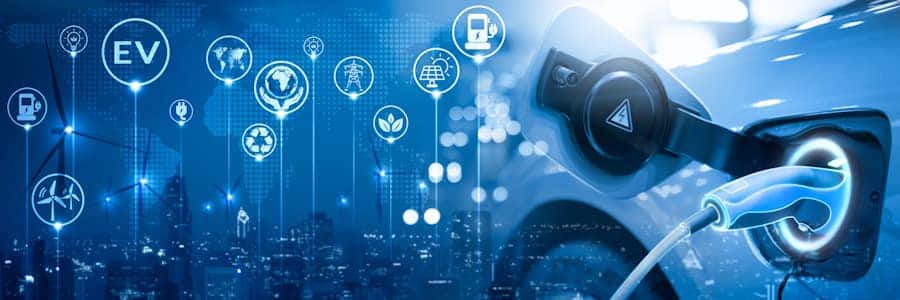
graphic with an electric car charging and ev related symbols

The Key Role Volkswagen Electric Cars Play in EV Expansion

How the Volkswagen Group Makes EVs More Accessible to Drivers A paradigm shift is occurring in the automotive industry, and Volkswagen is one of the major players in the fold. Although the era of electric vehicles began some time ago, VW is intent on proving that they are not an absentee at the EV party, but rather, fashionably late. In 2020, Volkswagen released their very first electric vehicle in the U.S. – the VW ID.4. The Volkswagen electric SUV won the 2021 World Car of the Year Award and was recognized as one of Ward's 10 Best User Experiences. Further, the ID.4 appeared on several editor's choice lists in the SUV and electric vehicle categories. Naturally, VW has big plans to build upon the success of their freshman effort. A Volkswagen electric car and microbus are due out within the next two years. Additionally, the German automaker has made several moves as an organization to promote the expansion of electric vehicles and build out the charging network for consumers. The VW Commitment to Sustainable Driving Volkswagen has made a pledge to reach net-zero carbon emissions by 2050, which aligns with the goals of the Paris Agreement. To achieve this, VW is investing heavily in their lineup of Volkswagen electric cars and SUVs. By committing to a future of electric mobility, the German automaker is leading the way towards a sustainable and electrified future. Volkswagen Electric Cars and SUVs - Shaping the Electric Revolution At the forefront of Volkswagen's electric vehicle lineup is the ID. family of VW vehicles. Using an innovative Modular Electric Drive Matrix (MEB) platform, each member of the ID. lineup features a future-forward design, advanced technology, and an impressive single-charge max driving range. The ID.7 – the first Volkswagen electric car – will likely go on sale sometime in 2024, according to Car and Driver. Currently, it is estimated the ID.7 will have a max single charge driving range of 435 miles. Also joining the ID. family is the 2025 Volkswagen ID.Buzz, which is a futuristic take on the old VW Microbus design from the 1960s. Projected to deliver up to 260 miles on a single charge, the Buzz is firmly poised to make a huge splash in the electric van segment. Of course, drivers can still count on the VW ID.4 to build upon its winning legacy. The 2023 iteration of this Volkswagen electric SUV recently hit the market. Pro models of the ID.4 deliver up to 275 miles on a single charge and are packed with the most technology and advanced features ever installed in a VW. Considering the variety and performance specs of these electric vehicles, the future looks quite bright for the ID. lineup. Expanding the Charging Infrastructure to Meet Consumer Demand To support the widespread adoption of electric vehicles, a robust and accessible charging infrastructure is crucial. Electrify America – Volkswagen's subsidiary – is spearheading the ambitious task of building a comprehensive charging network across the United States. According to TechCrunch, VW is committed to invest more than $2 billion in Electrify America over the next three years. Currently, there are more than 130,000 public charging stations across the U.S. The primary goal for VW is to deploy thousands more, making electric vehicle charging convenient and hassle-free for customers. Collaboration is crucial to achieving a seamless charging experience for electric vehicle owners. To this end, Volkswagen has engaged in partnerships with other industry leaders and charging networks that will provide consistent access to charging stations. Ideally, having a large and reliable charging network will alleviate the “range anxiety” that some drivers have about electric vehicles. By combining an advanced offering of Volkswagen electric cars, SUVs, and vans with an expanded charging network, the VW group is on track to address the major pain point that consumers have about EVs. It’s also worth noting that the 2023 VW ID.4 comes with three free years of unlimited 30-minute DC fast charging sessions at Electrify America charging stations. Where to Learn More About Eco-Friendly Volkswagen Electric Cars and SUVs Drivers who are interested in knowing more about what Volkswagen has in store for their electric vehicles and plans for improving sustainability should check out how they will produce vehicles using recycled materials. Additionally, drivers can check out the entire ID. lineup on the Volkswagen website. It’s a fantastic resource for learning about all the advantages of going electric and how electric vehicles and charging works. For additional questions about Volkswagen electric cars or VW vehicles that use a combustion engine, contact your local VW dealership.

close-up of vw logo

Top 4 Things to Know About the Volkswagen Travel Concept

How the Volkswagen Gen.Travel Will Serve as an Alternative to Short-Haul Flights Out of all the industries that pertain to travel, airlines statistically rack up some of the most complaints. The main problems pertain to high airfare, late flights, and flights that are outright canceled without an option to rebook. These problems only seem to compound around Thanksgiving and Christmas when there is an influx of travel. Last year during the holidays, some airlines demonstrated just how ill-prepared they were to deal with high volumes of travelers, which resulted in a record number of cancellations and stranded passengers at airports in 2022. This has been an ongoing problem, and yet travelers continue to risk it because airlines are the fastest way to get from point A to point B, especially for long distances. For short distances less than three hours in the air – referred to in the industry as short-haul flights – the option to drive may still be on the table for some folks. Southwest Airlines estimates a flight from Kansas City to St. Louis takes approximately one hour. However, when factoring early arrival for check-in, the boarding process, potential delays, and claiming luggage (if applicable), it will take significantly longer - so much longer, in fact, that perhaps driving takes the same amount of time. Keeping that in mind, the Volkswagen Gen.Travel concept aims to be the alternative to short-haul flights. The following are the top four things you should know about this vehicle and Volkswagen’s continual innovations. #1 – It’s One of the Most Advanced New Volkswagen Cars to Ever Be Assembled Originally unveiled at the Consumer Electronics Show in 2021, the Gen.Travel features a futuristic design that uses the modular electric drive matrix (MEB) platform. It’s the same platform used for the award-winning all-electric VW ID.4. It features two electric motors that yield 302 horsepower and a driving range up to 300 miles on a single charge (during ideal conditions), according to reporting from Autoweek. What really puts the Volkswagen Gen.Travel head and shoulders above other new Volkswagen cars is that it uses Level 5 autonomous driving technology, the most advanced self-driving technology of its kind. #2 – The Volkswagen Gen.Travel is Perfect for Rest or Work The Gen.Travel seats a maximum of four people and features tabletop surfaces that will hold everyone’s laptops with room to spare for snacks and beverages. Additionally, it’s whisper quiet, which means travelers won’t have to talk over an airplane engine or other nearby passengers. For those who want to catch some sleep while en route to their destination, the two front seats of the VW Gen.Travel lean all the way back, making for a comfy travel bed. It’s also worth noting the windows of the Gen.Travel can be dimmed down for a better sleeping environment. For those super long road trips where recharging is necessary, the Gen.Travel will find the nearest charging station and do it on its own. No human intervention is required. #3 – VW is Aiming for the Gen.Travel to Replace Short Haul Flights Circling back to the Kansas City to St. Louis trip, the Volkswagen Gen.Travel can accomplish that in less than four hours – the same as if a human being were behind the wheel. The difference is travelers will now be able to relax within the spacious interior of a hyper-quiet electric vehicle for the duration of the trip. The trip may take slightly longer than total flight and airport waiting times, but it will be less expensive, totally private, and within an environment passengers have control over. No crying babies. No turbulence or cabin pressure. No more trying to sleep while sitting upright. Comfort may very well win over speed for some travelers. That’s what VW is banking on. #4 – The Gen.Travel is Part of the Overall Sustainability Plan for All Volkswagen Vehicles The goal for Volkswagen is to become a carbon neutral company by 2050. In the United States, the first step toward this was the release of the all-electric VW ID.4, which was originally released in 2020. In addition to this electric SUV, VW has plans to release an electric microbus, an electric sedan, and another round of electric SUVs. However, the VW Gen.Travel concept is the only part of their eco-friendly plan to use self-driving cars. It's worth noting the Volkswagen Gen.Travel concept won’t be a reality for some time. Additional testing needs to be done before it’s ready for consumers. It is expected a production-ready model may debut at an auto show in the near future – perhaps as soon as this year or in 2024. Where to Learn More About Eco-Friendly Vehicles from Volkswagen Those who wish to learn more about the lineup of electric vehicles from VW are encouraged to check out the Volkswagen ID.4. Although there are more eco-friendly vehicles on the way, the VW ID.4 is the only one currently available in the United States. The 2023 model of the vehicle was recently released, so those who are interested in seeing it in person are encouraged to reach out to their local Volkswagen dealership.

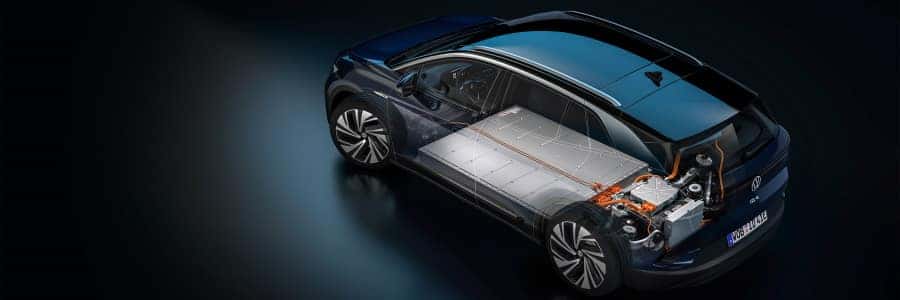
electric vehicle battery

The Main Factors that Affect the Mileage of a Volkswagen EV

What to Consider Before Shopping for a VW Electric Car for Sale in the Kansas City Area Last year the country learned a very hard lesson – gas prices can soar without warning. For those who were allowed to work from home during that time, the high gas prices didn’t hit too hard. However, there was a large percentage of Americans who weren’t afforded that luxury, and their daily commute suddenly became more expensive than ever before. In fact, some news stations reported that certain truck and SUV drivers were paying more than $100 per tank. While some drivers took a “grin and bear it” attitude, other vehicle owners started investigating their options. Electric vehicles got a lot of searches from disgruntled drivers who were tired of getting gouged on gasoline. Of course, when making the switch from a traditional to an electric vehicle, drivers are still at the mercy of a finite resource – the battery. For instance, the VW ID.4 Pro model – the all-electric Volkswagen EV – gets up to 275 miles on a single charge. However, the words “up to” indicate that 275 miles is the max range, and not necessarily the standard. To provide some clarity on what to expect when switching over to an EV, the following are the top factors that affect maximum driving range. #1 – Battery Age EV batteries are similar to cell phone batteries in that the older the battery is, the less efficiently you can expect it to work. As EV batteries age, their maximum charge capacity decreases. Experts report that EV batteries lose as much as two percent max charge capacity per year. #2 – Charge Status Another main determinant of range is how much charge is left on the battery. Your charge percentage directly correlates with how much mileage you’ll get out of the vehicle. Keep in mind, some EV batteries are specifically designed to not go above a certain charge percentage for the sake of sustainability. #3 – Road Conditions and Topography EV batteries are designed to recover when rolling downhill and braking. In fact, it’s possible to arrive at the bottom of a long downhill slope with more battery percentage than what you started with. Conversely, a steep uphill drive in challenging conditions, like snow, mud, or ice, will quickly drain your battery. #4 – Cargo Weight Adding cargo weight such as luggage and passengers means that your EV must work harder to carry the extra load. If you’re carrying hundreds of extra pounds in your Volkswagen EV, be prepared for lower battery efficiency. #5 – Wind Driving straight into a strong headwind means that your EV will have to work a little harder to push through it. Comparatively, a tailwind will help your Volkswagen EV conserve battery life. #6 – Tires Having all four tires at the correct PSI is critical when it comes to battery. Make sure that your tires aren’t low on air or else you might not get optimal driving range. #7 – Driving Style If you’re flooring it and pushing your Volkswagen EV to its absolute limit, you’re going to see your battery deplete at a faster rate. You can conserve your battery by sticking to the speed limit and being mindful of how you accelerate during merges or at green lights. #8 - Weather Nothing affects the efficiency of a battery quite like cold weather. Your battery won’t be able to hold a charge as well, which can make cross-country winter road trips a bit of a chore. It’s also worth noting that using the heat to keep the cabin warm further draws battery power. Looking for a Volkswagen EV Near You? Visit Your Local Volkswagen Dealership in Kansas City! Now that you know the main factors of what affects the mileage of an EV, you will be better prepared when planning long trips and your weekly commutes. Although there are several factors that affect an EV’s battery efficiency, what’s important to keep in mind is that most of the items on the list also affect vehicles with combustion engines. Kelley Blue Book estimates that the average person driving 1,058 miles per month spends approximately $56 every four weeks to charge their vehicle at home. Compare that to a driver who needs to fill their tank two or three times to get the same mileage, and you can get an idea of the savings. Finding a new electric vehicle in Lee’s Summit could very well be your path to lower cost of ownership, especially if gas prices significantly increase again. The best way to see if making the switch to a Volkswagen EV is the right move for you is by taking a test drive of the VW ID.4. This future-forward electric vehicle was the winner of the 2021 World Car of the Year Award and was named one of Wards 10 Best User Experiences. To arrange a test drive of the brand-new 2023 edition, simply reach out to the team at VW Lee’s Summit and we’ll set one aside for you. If you decide the ID.4 is the one for you, the VW finance team will be happy to help you secure an auto loan. You can also get a $7,500 credit on the ID.4 if you go with a lease option. Visit VW Lee’s Summit today at 2225 NE Independence Ave to inquire about a Volkswagen EV or traditional vehicle. You can also reach out to us with questions or to set an appointment by calling (816) 841-7253 or via email using our contact form.

  Call Today